by marketing | Jun 24, 2026 | blog, News @ ORT, Old News
𝐓𝐡𝐞 𝐅𝐮𝐭𝐮𝐫𝐞 𝐄𝐧𝐠𝐢𝐧𝐞𝐞𝐫𝐬 𝐨𝐟 𝐒𝐨𝐮𝐭𝐡 𝐀𝐟𝐫𝐢𝐜𝐚 𝐀𝐫𝐞 𝐀𝐥𝐫𝐞𝐚𝐝𝐲 𝐢𝐧 𝐭𝐡𝐞 𝐑𝐨𝐨𝐦
By Deon Visser
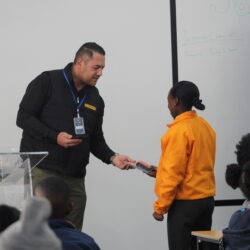
One of the most powerful moments of the Young Engineers Movement (YEM) Hackathon came when engineer Deon Visser addressed the 55 learners gathered at ORT South Africa.
Speaking to learners from 11 schools across Gauteng, Visser delivered a message that went beyond engineering. It was a message about possibility, perseverance, and believing in your ability to shape the future.
He challenged learners to look around the room and recognise that the next generation of engineers, innovators, and problem-solvers is already here. The people who will one day design bridges, create sustainable energy solutions, solve water shortages, and build smarter communities may be sitting in classrooms today.
For many of the learners attending YEM, this message resonated deeply. Coming from communities where opportunities can sometimes feel limited, they were reminded that circumstances do not determine their future. Determination does.
Throughout his talk, Visser encouraged learners to see themselves as problem-solvers. Engineering, he explained, is not simply about mathematics and science. It is about looking at a challenge and asking:
How can I make this better?
How can I solve this problem?
How can I improve people’s lives?
These questions sit at the heart of the YEM Hackathon, where learners spend the week identifying real-world challenges and developing innovative solutions through technology, engineering, and teamwork.
Visser also spoke honestly about the challenges that every aspiring engineer will face. There will be difficult tests, complex equations, and moments of self-doubt. Success, he reminded learners, is not about being the smartest person in the room. It is about refusing to give up.
Perhaps the most memorable part of his message was a simple response to those who say a dream is impossible:
“Watch me.”
Whether facing financial challenges, limited resources, or societal expectations, learners were encouraged to believe that they belong in engineering and technology spaces.
His message aligned perfectly with the purpose of YEM: exposing young people to STEM careers while helping them develop the confidence to pursue them.
As learners continue building prototypes and preparing for the final exhibition, they carry with them an important reminder: South Africa’s future engineers are not only found in wealthy neighbourhoods or prestigious schools. They are found in townships, rural communities, ordinary classrooms, and in rooms just like the one that launched YEM 2026.
The future is not waiting to arrive.
It is already being built.
by marketing | Jun 15, 2026 | blog, News @ ORT
𝐓𝐡𝐞 𝐮𝐧𝐟𝐢𝐧𝐢𝐬𝐡𝐞𝐝 𝐰𝐨𝐫𝐤 𝐨𝐟 𝐉𝐮𝐧𝐞 𝟏𝟔
By Ariellah Rosenberg, CEO of ORT SA
Every year, Youth Day asks South Africa to remember the courage of young people who stood against a system designed to limit their future. The young people of 1976 were not only protesting a language policy. They were rejecting an education system that prepared black children for a life of restricted opportunity.
Nearly five decades later, the laws have changed. The language has changed. The promises have changed. But for too many young South Africans, the outcome remains painfully familiar: they are still being educated into exclusion.
The crisis is not only unemployment. It is the collapse of the bridge between learning and earning.
According to Stats SA’s latest Quarterly Labour Force Survey, South Africa’s youth unemployment rate for those aged 15 to 34 stands at 45.8%. Among young people aged 15 to 24, it is 60.9%. These figures are often repeated, and perhaps that is part of the problem. They have become so familiar that they risk losing their shock.
Behind the percentages are young people who have done what they were told to do. They finished school. Some completed learnerships, short courses, diplomas or degrees. They applied for jobs. They rewrote CVs. They attended interviews. They waited. And still, too often, they remained outside the economy.
In South Africa, unemployment has begun to collapse the ladder of opportunity. Entry-level jobs are no longer reserved for young people entering the workforce for the first time. They are contested by graduates, retrenched workers, experienced adults and first-time jobseekers, all competing for the same narrow openings.
When everyone is forced to take whatever work they can find, the labour market becomes distorted. Young people lose the chance to start. Experienced workers move backwards. Employers raise the bar for junior positions. And the normal pathway from learning, to first work, to growth begins to disappear.
We see this in job adverts that describe a role as “entry-level” but still require two years of experience. We see it when young graduates are offered unpaid internships they cannot afford to take. We see it when employers say they cannot find work-ready candidates, while young people say they cannot become work-ready because nobody will give them their first opportunity.
This is the cruel contradiction at the centre of youth unemployment: young people are told they lack experience, but experience is treated as a reward rather than a starting point.
Training alone will not solve this.
South Africa has invested heavily in skills development, and rightly so. But skills without access to employers can become another waiting room. A certificate matters only if it helps a young person move closer to work. A programme matters only if it is connected to demand in the economy. A learnership matters only if it gives a young person more than temporary activity.
At ORT SA, we have seen how different the outcome can be when training is designed as a bridge, not an event.
One example is Sandile Mgobhozi, who completed ORT SA’s Big Data programme. The programme was not built around theory alone. It was designed to equip young people with digital and analytical skills that employers actually need. Sandile has since secured a permanent position at Cape Union Mart.
His story is important not because it is exceptional, but because it shows what should be normal. When a young person receives relevant training, workplace exposure, mentorship and a credible link to industry, employment becomes possible. Not guaranteed, but possible. That is already more than millions of young people are currently offered.
South Africa does not need another layer of well-intentioned programmes that keep young people busy without moving them forward. We need practical bridges into real work.
First, employers must rethink entry-level hiring. If a role is truly junior, it should not require years of experience. Companies can assess attitude, learning ability, communication, reliability and problem-solving without excluding young people before they begin. Work-readiness is developed through work, not before it.
Second, training providers and NGOs must build programmes with employers from the start. The question should not be, “What course can we offer?” It should be, “Where is there demand, what skills are missing, and what support will help young people survive the transition into work?”
Third, small and medium businesses need to be part of the solution. Large corporates cannot absorb all young jobseekers. SMEs are often closer to communities and can offer meaningful first-work opportunities, but they need support to host, mentor and retain young people. This could include wage support, practical HR guidance and simpler access to youth employment incentives.
Finally, we need to restore the idea of progression. A first job does not need to be perfect. But it must be a beginning. It must give a young person a reference, a routine, a skill, a network and proof that they can contribute.
The young people of 1976 fought against a system that told them their futures had already been decided. Today’s young people face a different system, but too many are receiving a similar message: there is no space for you yet.
In 1976, young people demanded the right to learn. In 2026, their children and grandchildren are still fighting for the right to earn.
June 16 cannot only be a day of remembrance. It must be a measure of whether we are building the systems that build the bridge from education to economic life.
by marketing | Apr 29, 2026 | blog, News @ ORT
𝐖𝐡𝐚𝐭 𝟗𝟎 𝐘𝐞𝐚𝐫𝐬 𝐇𝐚𝐬 𝐓𝐚𝐮𝐠𝐡𝐭 𝐔𝐬 𝐀𝐛𝐨𝐮𝐭 𝐭𝐡𝐞 𝐑𝐞𝐚𝐥 𝐖𝐨𝐫𝐤 𝐨𝐟 𝐄𝐝𝐮𝐜𝐚𝐭𝐢𝐨𝐧
𝐅𝐫𝐨𝐦 𝐖𝐨𝐫𝐤𝐛𝐞𝐧𝐜𝐡𝐞𝐬 𝐭𝐨 𝐂𝐨𝐝𝐞: 𝐓𝐡𝐞 𝐉𝐨𝐛𝐬 𝐂𝐡𝐚𝐧𝐠𝐞𝐝. 𝐓𝐡𝐞 𝐌𝐢𝐬𝐬𝐢𝐨𝐧 𝐃𝐢𝐝𝐧’𝐭.
By Ariellah Rosenberg CEO of ORT SA
There is a photograph in the World ORT archive that stops you in your tracks.
Taken at King David School in Johannesburg in 1952, it shows children bent over wooden workbenches, hands moving with purpose as they learn woodwork, a reliable path to work in post-war South Africa.
It is a quietly powerful image. But what makes it remarkable is what it represents: ninety years of an organisation that has never stopped asking a simple question:
𝐖𝐡𝐚𝐭 𝐝𝐨𝐞𝐬 𝐭𝐡𝐞 𝐰𝐨𝐫𝐥𝐝 𝐚𝐜𝐭𝐮𝐚𝐥𝐥𝐲 𝐧𝐞𝐞𝐝, 𝐚𝐧𝐝 𝐡𝐨𝐰 𝐝𝐨 𝐰𝐞 𝐩𝐫𝐞𝐩𝐚𝐫𝐞 𝐩𝐞𝐨𝐩𝐥𝐞 𝐟𝐨𝐫 𝐢𝐭?
That question has shaped ORT South Africa since its founding in 1936.
In the 1940s and 1950s, South Africa’s growing industries demanded skilled labour. ORT SA responded with precision, placing more than 1,200 individuals into 80 trades, from textiles and electrical work to mechanical engineering and the motor industry. Bursaries ensured financial barriers did not prevent access to opportunity.
The principle was already clear:
𝐠𝐮𝐢𝐝𝐚𝐧𝐜𝐞 𝐰𝐢𝐭𝐡𝐨𝐮𝐭 𝐚𝐜𝐜𝐞𝐬𝐬 𝐢𝐬 𝐦𝐞𝐫𝐞𝐥𝐲 𝐚𝐝𝐯𝐢𝐜𝐞.
𝐓𝐡𝐞 𝐏𝐨𝐰𝐞𝐫 𝐨𝐟 𝐎𝐧𝐞 𝐂𝐨𝐧𝐯𝐞𝐫𝐬𝐚𝐭𝐢𝐨𝐧
Sometimes the impact of education begins with a single conversation.
As a teenager, Beverly Cohen sat with an ORT counsellor unsure how to translate her many interests into a career. She excelled academically but felt pulled between science, music, and drama.
The counsellor listened carefully and suggested a path she had never considered: optometry.
That small suggestion shaped her future. Beverly went on to become a professor of optometry in the United States and later supported ICT programmes that introduced coding and robotics to South African schools.
𝐎𝐧𝐞 𝐜𝐨𝐧𝐯𝐞𝐫𝐬𝐚𝐭𝐢𝐨𝐧 𝐛𝐞𝐜𝐚𝐦𝐞 𝐚 𝐜𝐚𝐫𝐞𝐞𝐫.
𝐀 𝐜𝐚𝐫𝐞𝐞𝐫 𝐛𝐞𝐜𝐚𝐦𝐞 𝐚 𝐜𝐨𝐧𝐭𝐫𝐢𝐛𝐮𝐭𝐢𝐨𝐧.
That is the long arc of well-timed guidance.
𝐀 𝐂𝐨𝐮𝐧𝐭𝐫𝐲 𝐓𝐫𝐚𝐧𝐬𝐟𝐨𝐫𝐦𝐬 𝐚𝐧𝐝 𝐒𝐨 𝐃𝐨𝐞𝐬 𝐎𝐩𝐩𝐨𝐫𝐭𝐮𝐧𝐢𝐭𝐲
The 1990s marked a turning point for South Africa. The end of apartheid reshaped not only politics, but access to education and economic opportunity.
ORT SA responded by expanding science and technology education. Through programmes like ORT-STEP, teachers in disadvantaged communities were equipped to deliver stronger mathematics and science education.
During this period, Terence Selwoa became the first Black student to receive an ORT SA bursary, a milestone that reflected a broader commitment to expanding opportunity in a newly democratic South Africa.
The transition to democracy was not only political. It was educational and economic, and closing opportunity gaps became essential.
𝐅𝐫𝐨𝐦 𝐖𝐨𝐫𝐤𝐛𝐞𝐧𝐜𝐡𝐞𝐬 𝐭𝐨 𝐒𝐜𝐫𝐞𝐞𝐧𝐬
By the 2000s, the nature of work was changing again. Digital skills became essential, yet access remained uneven.
ORT SA followed the economy once more.
Teacher training expanded. Programmes introduced digital literacy into under-resourced communities. Initiatives supported educators in translating knowledge into effective teaching.
The guiding insight remained unchanged:
𝐦𝐞𝐞𝐭 𝐩𝐞𝐨𝐩𝐥𝐞 𝐰𝐡𝐞𝐫𝐞 𝐭𝐡𝐞𝐲 𝐚𝐫𝐞, 𝐧𝐨𝐭 𝐰𝐡𝐞𝐫𝐞 𝐭𝐡𝐞 𝐬𝐲𝐬𝐭𝐞𝐦 𝐚𝐬𝐬𝐮𝐦𝐞𝐬 𝐭𝐡𝐞𝐦 𝐭𝐨 𝐛𝐞.
Today, the pace of change is faster than ever. Artificial intelligence, automation, and emerging technologies are reshaping industries, while youth unemployment remains one of South Africa’s greatest challenges.
Through its Career Hub, STEM Academy, IT Academy, and entrepreneurship programmes, ORT SA is building pathways into the future of work, emphasising adaptability, problem-solving, and digital skills.
The workbench of 1952 has been replaced by screens.
But the principle remains the same:
𝐭𝐞𝐚𝐜𝐡 𝐩𝐞𝐨𝐩𝐥𝐞 𝐡𝐨𝐰 𝐭𝐨 𝐛𝐮𝐢𝐥𝐝 𝐬𝐨𝐦𝐞𝐭𝐡𝐢𝐧𝐠 𝐨𝐟 𝐯𝐚𝐥𝐮𝐞, 𝐚𝐧𝐝 𝐭𝐡𝐞𝐲 𝐰𝐢𝐥𝐥 𝐟𝐢𝐧𝐝 𝐭𝐡𝐞𝐢𝐫 𝐩𝐥𝐚𝐜𝐞 𝐢𝐧 𝐭𝐡𝐞 𝐰𝐨𝐫𝐥𝐝.
𝐀 𝐅𝐮𝐥𝐥-𝐂𝐢𝐫𝐜𝐥𝐞 𝐅𝐮𝐭𝐮𝐫𝐞
Tanaka began as a learner in ORT SA’s Let Kidz Code programme.
What started as basic exposure to coding became a pathway into opportunity.
Today, Tanaka works at the Raspberry Pi Foundation, helping review ORT SA as a strategic partner in delivering coding clubs that will reach thousands of learners across the Eastern Cape.
𝐀 𝐬𝐭𝐮𝐝𝐞𝐧𝐭 𝐛𝐞𝐜𝐨𝐦𝐞𝐬 𝐚 𝐥𝐞𝐚𝐝𝐞𝐫.
𝐀 𝐩𝐚𝐫𝐭𝐢𝐜𝐢𝐩𝐚𝐧𝐭 𝐛𝐞𝐜𝐨𝐦𝐞𝐬 𝐚 𝐝𝐞𝐜𝐢𝐬𝐢𝐨𝐧-𝐦𝐚𝐤𝐞𝐫.
That is what long-term impact looks like.
𝐓𝐡𝐞 𝐖𝐨𝐫𝐤 𝐀𝐡𝐞𝐚𝐝
Across ninety years, ORT South Africa has remained focused on one truth:
𝙏𝙖𝙡𝙚𝙣𝙩 𝙞𝙨 𝙬𝙞𝙙𝙚𝙡𝙮 𝙙𝙞𝙨𝙩𝙧𝙞𝙗𝙪𝙩𝙚𝙙. 𝙊𝙥𝙥𝙤𝙧𝙩𝙪𝙣𝙞𝙩𝙮 𝙞𝙨 𝙣𝙤𝙩.
Bridging that gap has defined ORT SA’s work for decades and will continue to shape its future.
The world beyond the classroom looks very different today than it did in 1936. But the mission remains the same:
𝙩𝙤 𝙝𝙚𝙡𝙥 𝙥𝙚𝙤𝙥𝙡𝙚 𝙛𝙞𝙣𝙙 𝙩𝙝𝙚𝙞𝙧 𝙥𝙡𝙖𝙘𝙚 𝙞𝙣 𝙩𝙝𝙚 𝙬𝙤𝙧𝙡𝙙 𝙖𝙣𝙙 𝙚𝙣𝙨𝙪𝙧𝙚 𝙩𝙝𝙖𝙩 𝙖𝙘𝙘𝙚𝙨𝙨 𝙩𝙤 𝙩𝙝𝙖𝙩 𝙛𝙪𝙩𝙪𝙧𝙚 𝙞𝙨 𝙨𝙝𝙖𝙥𝙚𝙙 𝙗𝙮 𝙥𝙤𝙨𝙨𝙞𝙗𝙞𝙡𝙞𝙩𝙮, 𝙣𝙤𝙩 𝙘𝙞𝙧𝙘𝙪𝙢𝙨𝙩𝙖𝙣𝙘𝙚.
Are you part of the ORT SA story? We’d love to hear from you.
Share your journey with Ariellah: Ariellah@ortsa.org.za

by marketing | Apr 29, 2026 | blog, News @ ORT
𝐖𝐡𝐚𝐭 𝟗𝟎 𝐘𝐞𝐚𝐫𝐬 𝐇𝐚𝐬 𝐓𝐚𝐮𝐠𝐡𝐭 𝐔𝐬 𝐀𝐛𝐨𝐮𝐭 𝐭𝐡𝐞 𝐑𝐞𝐚𝐥 𝐖𝐨𝐫𝐤 𝐨𝐟 𝐄𝐝𝐮𝐜𝐚𝐭𝐢𝐨𝐧
𝐅𝐫𝐨𝐦 𝐖𝐨𝐫𝐤𝐛𝐞𝐧𝐜𝐡𝐞𝐬 𝐭𝐨 𝐂𝐨𝐝𝐞: 𝐓𝐡𝐞 𝐉𝐨𝐛𝐬 𝐂𝐡𝐚𝐧𝐠𝐞𝐝. 𝐓𝐡𝐞 𝐌𝐢𝐬𝐬𝐢𝐨𝐧 𝐃𝐢𝐝𝐧’𝐭.
There is a photograph in the World ORT archive that stops you in your tracks.
Taken at King David School in Johannesburg in 1952, it shows children bent over wooden workbenches, hands moving with purpose as they learn woodwork, a reliable path to work in post-war South Africa.
It is a quietly powerful image. But what makes it remarkable is what it represents: ninety years of an organisation that has never stopped asking a simple question:
𝐖𝐡𝐚𝐭 𝐝𝐨𝐞𝐬 𝐭𝐡𝐞 𝐰𝐨𝐫𝐥𝐝 𝐚𝐜𝐭𝐮𝐚𝐥𝐥𝐲 𝐧𝐞𝐞𝐝, 𝐚𝐧𝐝 𝐡𝐨𝐰 𝐝𝐨 𝐰𝐞 𝐩𝐫𝐞𝐩𝐚𝐫𝐞 𝐩𝐞𝐨𝐩𝐥𝐞 𝐟𝐨𝐫 𝐢𝐭?
That question has shaped ORT South Africa since its founding in 1936.
In the 1940s and 1950s, South Africa’s growing industries demanded skilled labour. ORT SA responded with precision, placing more than 1,200 individuals into 80 trades, from textiles and electrical work to mechanical engineering and the motor industry. Bursaries ensured financial barriers did not prevent access to opportunity.
The principle was already clear:
𝐠𝐮𝐢𝐝𝐚𝐧𝐜𝐞 𝐰𝐢𝐭𝐡𝐨𝐮𝐭 𝐚𝐜𝐜𝐞𝐬𝐬 𝐢𝐬 𝐦𝐞𝐫𝐞𝐥𝐲 𝐚𝐝𝐯𝐢𝐜𝐞.
𝐓𝐡𝐞 𝐏𝐨𝐰𝐞𝐫 𝐨𝐟 𝐎𝐧𝐞 𝐂𝐨𝐧𝐯𝐞𝐫𝐬𝐚𝐭𝐢𝐨𝐧
Sometimes the impact of education begins with a single conversation.
As a teenager, Beverly Cohen sat with an ORT counsellor unsure how to translate her many interests into a career. She excelled academically but felt pulled between science, music, and drama.
The counsellor listened carefully and suggested a path she had never considered: optometry.
That small suggestion shaped her future. Beverly went on to become a professor of optometry in the United States and later supported ICT programmes that introduced coding and robotics to South African schools.
𝐎𝐧𝐞 𝐜𝐨𝐧𝐯𝐞𝐫𝐬𝐚𝐭𝐢𝐨𝐧 𝐛𝐞𝐜𝐚𝐦𝐞 𝐚 𝐜𝐚𝐫𝐞𝐞𝐫.
𝐀 𝐜𝐚𝐫𝐞𝐞𝐫 𝐛𝐞𝐜𝐚𝐦𝐞 𝐚 𝐜𝐨𝐧𝐭𝐫𝐢𝐛𝐮𝐭𝐢𝐨𝐧.
That is the long arc of well-timed guidance.
𝐀 𝐂𝐨𝐮𝐧𝐭𝐫𝐲 𝐓𝐫𝐚𝐧𝐬𝐟𝐨𝐫𝐦𝐬 𝐚𝐧𝐝 𝐒𝐨 𝐃𝐨𝐞𝐬 𝐎𝐩𝐩𝐨𝐫𝐭𝐮𝐧𝐢𝐭𝐲
The 1990s marked a turning point for South Africa. The end of apartheid reshaped not only politics, but access to education and economic opportunity.
ORT SA responded by expanding science and technology education. Through programmes like ORT-STEP, teachers in disadvantaged communities were equipped to deliver stronger mathematics and science education.
During this period, Terence Selwoa became the first Black student to receive an ORT SA bursary, a milestone that reflected a broader commitment to expanding opportunity in a newly democratic South Africa.
The transition to democracy was not only political. It was educational and economic, and closing opportunity gaps became essential.
𝐅𝐫𝐨𝐦 𝐖𝐨𝐫𝐤𝐛𝐞𝐧𝐜𝐡𝐞𝐬 𝐭𝐨 𝐒𝐜𝐫𝐞𝐞𝐧𝐬
By the 2000s, the nature of work was changing again. Digital skills became essential, yet access remained uneven.
ORT SA followed the economy once more.
Teacher training expanded. Programmes introduced digital literacy into under-resourced communities. Initiatives supported educators in translating knowledge into effective teaching.
The guiding insight remained unchanged:
𝐦𝐞𝐞𝐭 𝐩𝐞𝐨𝐩𝐥𝐞 𝐰𝐡𝐞𝐫𝐞 𝐭𝐡𝐞𝐲 𝐚𝐫𝐞, 𝐧𝐨𝐭 𝐰𝐡𝐞𝐫𝐞 𝐭𝐡𝐞 𝐬𝐲𝐬𝐭𝐞𝐦 𝐚𝐬𝐬𝐮𝐦𝐞𝐬 𝐭𝐡𝐞𝐦 𝐭𝐨 𝐛𝐞.
Today, the pace of change is faster than ever. Artificial intelligence, automation, and emerging technologies are reshaping industries, while youth unemployment remains one of South Africa’s greatest challenges.
Through its Career Hub, STEM Academy, IT Academy, and entrepreneurship programmes, ORT SA is building pathways into the future of work, emphasising adaptability, problem-solving, and digital skills.
The workbench of 1952 has been replaced by screens.
But the principle remains the same:
𝐭𝐞𝐚𝐜𝐡 𝐩𝐞𝐨𝐩𝐥𝐞 𝐡𝐨𝐰 𝐭𝐨 𝐛𝐮𝐢𝐥𝐝 𝐬𝐨𝐦𝐞𝐭𝐡𝐢𝐧𝐠 𝐨𝐟 𝐯𝐚𝐥𝐮𝐞, 𝐚𝐧𝐝 𝐭𝐡𝐞𝐲 𝐰𝐢𝐥𝐥 𝐟𝐢𝐧𝐝 𝐭𝐡𝐞𝐢𝐫 𝐩𝐥𝐚𝐜𝐞 𝐢𝐧 𝐭𝐡𝐞 𝐰𝐨𝐫𝐥𝐝.
𝐀 𝐅𝐮𝐥𝐥-𝐂𝐢𝐫𝐜𝐥𝐞 𝐅𝐮𝐭𝐮𝐫𝐞
Tanaka began as a learner in ORT SA’s Let Kidz Code programme.
What started as basic exposure to coding became a pathway into opportunity.
Today, Tanaka works at the Raspberry Pi Foundation, helping review ORT SA as a strategic partner in delivering coding clubs that will reach thousands of learners across the Eastern Cape.
𝐀 𝐬𝐭𝐮𝐝𝐞𝐧𝐭 𝐛𝐞𝐜𝐨𝐦𝐞𝐬 𝐚 𝐥𝐞𝐚𝐝𝐞𝐫.
𝐀 𝐩𝐚𝐫𝐭𝐢𝐜𝐢𝐩𝐚𝐧𝐭 𝐛𝐞𝐜𝐨𝐦𝐞𝐬 𝐚 𝐝𝐞𝐜𝐢𝐬𝐢𝐨𝐧-𝐦𝐚𝐤𝐞𝐫.
That is what long-term impact looks like.
𝐓𝐡𝐞 𝐖𝐨𝐫𝐤 𝐀𝐡𝐞𝐚𝐝
Across ninety years, ORT South Africa has remained focused on one truth:
𝐓𝐚𝐥𝐞𝐧𝐭 𝐢𝐬 𝐰𝐢𝐝𝐞𝐥𝐲 𝐝𝐢𝐬𝐭𝐫𝐢𝐛𝐮𝐭𝐞𝐝. 𝐎𝐩𝐩𝐨𝐫𝐭𝐮𝐧𝐢𝐭𝐲 𝐢𝐬 𝐧𝐨𝐭.
Bridging that gap has defined ORT SA’s work for decades and will continue to shape its future.
The world beyond the classroom looks very different today than it did in 1936. But the mission remains the same:
𝐭𝐨 𝐡𝐞𝐥𝐩 𝐩𝐞𝐨𝐩𝐥𝐞 𝐟𝐢𝐧𝐝 𝐭𝐡𝐞𝐢𝐫 𝐩𝐥𝐚𝐜𝐞 𝐢𝐧 𝐭𝐡𝐞 𝐰𝐨𝐫𝐥𝐝 𝐚𝐧𝐝 𝐞𝐧𝐬𝐮𝐫𝐞 𝐭𝐡𝐚𝐭 𝐚𝐜𝐜𝐞𝐬𝐬 𝐭𝐨 𝐭𝐡𝐚𝐭 𝐟𝐮𝐭𝐮𝐫𝐞 𝐢𝐬 𝐬𝐡𝐚𝐩𝐞𝐝 𝐛𝐲 𝐩𝐨𝐬𝐬𝐢𝐛𝐢𝐥𝐢𝐭𝐲, 𝐧𝐨𝐭 𝐜𝐢𝐫𝐜𝐮𝐦𝐬𝐭𝐚𝐧𝐜𝐞.
by marketing | Feb 24, 2026 | blog, News @ ORT, Old News
𝐂𝐞𝐥𝐞𝐛𝐫𝐚𝐭𝐢𝐧𝐠 𝐭𝐡𝐞 𝐄𝐯𝐨𝐥𝐮𝐭𝐢𝐨𝐧 𝐨𝐟 𝐖𝐨𝐦𝐞𝐧 𝐢𝐧 𝐒𝐓𝐄𝐌: 𝐁𝐫𝐞𝐚𝐤𝐢𝐧𝐠 𝐁𝐚𝐫𝐫𝐢𝐞𝐫𝐬 𝐚𝐧𝐝 𝐂𝐡𝐚𝐥𝐥𝐞𝐧𝐠𝐢𝐧𝐠 𝐭𝐡𝐞 𝐌𝐚𝐭𝐢𝐥𝐝𝐚 𝐄𝐟𝐟𝐞𝐜𝐭
What innovations have we lost because a girl once heard the words, “Science isn’t for you”? As we commemorate the International Day of Women and Girls in Science on 11 February, we reflect not only on the women who shaped scientific history but also on the many whose contributions were dismissed, forgotten, or erased. Their stories remind us why encouraging girls to pursue STEM is not just important, it is essential for global progress.
At the heart of this issue lies the 𝐌𝐚𝐭𝐢𝐥𝐝𝐚 𝐄𝐟𝐟𝐞𝐜𝐭, a term used to describe the long-standing pattern of overlooking or misattributing women’s scientific achievements. This effect reveals a painful truth: women have always contributed to science, but history hasn’t always allowed them to be seen.
𝐖𝐨𝐦𝐞𝐧 𝐖𝐡𝐨 𝐃𝐞𝐟𝐢𝐞𝐝 𝐓𝐡𝐞𝐢𝐫 𝐓𝐢𝐦𝐞
The story of women in STEM stretches back centuries, long before laboratories, universities, or modern careers existed. One of the earliest examples is Agnodice, an Athenian woman who defied strict laws that forbade women from practicing medicine. Determined to help the women of her city, she disguised herself as a man and became a skilled midwife physician. Her popularity grew quickly, so quickly, in fact, that male physicians accused her of impropriety.
When she courageously revealed her true identity to defend herself, she exposed not only her innocence but the injustice of the restrictions placed upon women. Her case sparked public outrage and ultimately pushed lawmakers to rethink the role of women in medicine. Agnodice’s story shows that even in ancient times, women were innovating, healing, and leading, often at great personal risk.
𝐈𝐧𝐧𝐨𝐯𝐚𝐭𝐢𝐨𝐧 𝐒𝐞𝐞𝐧, 𝐁𝐮𝐭 𝐍𝐨𝐭 𝐑𝐞𝐜𝐨𝐠𝐧𝐢𝐬𝐞𝐝
Centuries later, the pattern continued. In the early 1900s, Mary Anderson witnessed a streetcar driver repeatedly stopping to wipe snow from his windshield. Seeing a problem that needed solving, she designed and patented the first manual windshield wiper in 1903.
Although her invention greatly improved driver safety, manufacturers dismissed it as unnecessary. Anderson’s patent expired before cars became widespread, and just a few years later, windshield wipers became standard features on every vehicle, without her receiving any recognition or financial benefit.
Her story is a textbook example of the Matilda Effect: a woman innovates, the world benefits, but the credit never reaches her name.
𝐌𝐨𝐝𝐞𝐫𝐧 𝐑𝐨𝐥𝐞 𝐌𝐨𝐝𝐞𝐥𝐬 𝐆𝐢𝐫𝐥𝐬 𝐂𝐚𝐧 𝐒𝐞𝐞
Fortunately, not all stories are lost to history. Today, women like Ariellah Rosenberg show girls what is possible when passion meets opportunity. Starting her career as a science teacher and later working in a science museum, Ariellah built her life around making science accessible and exciting. Now, as the CEO of ORT SA, she leads initiatives that equip young people with skills in coding, robotics, digital literacy, and technology.
Her journey, from classroom to leadership, matters. Representation is powerful. When girls see women thriving in STEM roles, they begin to imagine themselves in those spaces too. It sends a clear message: you belong here.
𝐖𝐡𝐲 𝐄𝐧𝐜𝐨𝐮𝐫𝐚𝐠𝐢𝐧𝐠 𝐆𝐢𝐫𝐥𝐬 𝐢𝐧 𝐒𝐓𝐄𝐌 𝐌𝐚𝐭𝐭𝐞𝐫𝐬 𝐓𝐨𝐝𝐚𝐲
Even now, girls begin doubting their abilities in math’s and science as early as primary school. These gaps aren’t rooted in capability, they’re rooted in confidence, stereotypes, and a lack of visible role models. As girls grow older, these barriers widen, resulting in fewer women pursuing STEM subjects in high school, university, and professional fields.
This isn’t just a gender issue, it’s a global issue. The world needs diverse thinkers to solve complex challenges: climate change, public health, technological innovation, environmental sustainability, and more. When girls are pushed away from STEM, we lose ideas, discoveries, and innovations that could change the world. ORT SA plays a critical role in empowering girls to build brighter, more ambitious futures. Through dynamic STEM programmes that focus on innovation, problem solving, and creativity, ORT SA equips girls with both the skills and the confidence to pursue careers in science and technology. Each project, each robot built, each piece of code written is a step toward dismantling outdated stereotypes and building a more inclusive future
𝐀 𝐅𝐮𝐭𝐮𝐫𝐞 𝐖𝐡𝐞𝐫𝐞 𝐆𝐢𝐫𝐥𝐬 𝐋𝐞𝐚𝐝
Encouraging girls to pursue STEM is not just about equity, it’s about unlocking the full potential of the next generation. When we recognise the women who paved the way, challenge the biases that still exist, and actively empower young girls to explore and excel, we don’t just change their lives, we change the future of science, innovation, and society
𝐋𝐞𝐭’𝐬 𝐜𝐨𝐧𝐭𝐢𝐧𝐮𝐞 𝐭𝐞𝐥𝐥𝐢𝐧𝐠 𝐭𝐡𝐞𝐢𝐫 𝐬𝐭𝐨𝐫𝐢𝐞𝐬.
𝐋𝐞𝐭’𝐬 𝐜𝐨𝐧𝐭𝐢𝐧𝐮𝐞 𝐨𝐩𝐞𝐧𝐢𝐧𝐠 𝐝𝐨𝐨𝐫𝐬.
𝐋𝐞𝐭’𝐬 𝐞𝐧𝐬𝐮𝐫𝐞 𝐞𝐯𝐞𝐫𝐲 𝐠𝐢𝐫𝐥 𝐤𝐧𝐨𝐰𝐬: 𝐒𝐓𝐄𝐌 𝐢𝐬𝐧’𝐭 𝐣𝐮𝐬𝐭 𝐟𝐨𝐫 𝐬𝐨𝐦𝐞, 𝐢𝐭’𝐬 𝐟𝐨𝐫 𝐡𝐞𝐫.

